





The Tech Revolution: How the Fan Experience Changed in 2026
The Rise of “Spatial Fandom”: VR & AR
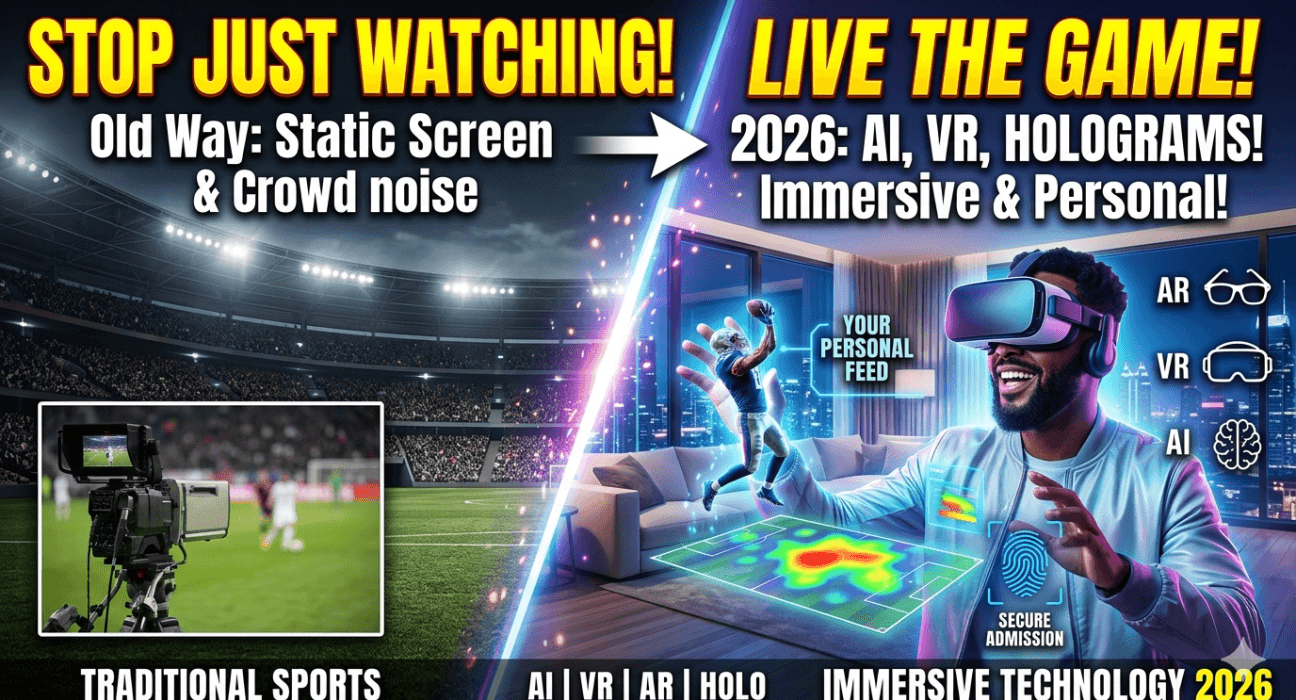
In 2026, Virtual Reality (VR) and Augmented Reality (AR) have bridged the gap between the stadium and the living room.
- Virtual Courtside Seats: Fans globally are using high-fidelity VR headsets to “sit” courtside at the NBA Finals or behind the dugout at the World Series, complete with 360-degree spatial audio that captures the roar of the crowd.
- AR Layered Stadiums: For those physically at the venue, AR-enabled glasses or smartphone overlays provide real-time player heat maps, sprint speeds, and “line-to-gain” markers directly on the field of play.
AI-Driven Personalization
Artificial Intelligence is now the ultimate digital concierge for every sports fan.
- Predictive Highlights: AI algorithms now curate personalized “reels” for fans in real-time, focusing specifically on their favorite players or tactical interests (e.g., only showing successful three-pointers or defensive interceptions).
- Smart Stadium Logistics: AI systems manage crowd flow and concessions, allowing fans to order food via biometric scanners and receive it at their seat during the most “predictable” low-action moments of a match.
Holographic “Live” Replays
2026 has seen the debut of holographic tabletop displays. Using volumetric capture technology, fans can now watch a 3D holographic “miniature” version of a touchdown or a goal play out on their coffee table immediately after it happens in real life.
The Gamification of Spectatorship
The line between gaming and watching has blurred.
- Real-Time Micro-Betting: Integrated platforms allow fans to predict the outcome of the very next play—such as whether a pitcher will throw a strike—within the broadcast interface.
- Digital Collectibles: Moments of historic significance are minted as instant digital assets (NFTs) that fans can “claim” by being physically present at the stadium or by hitting specific engagement milestones during a stream.