






Health Alerts Rising: Europe Confronts Andes Hantavirus and Emerging Viral Threats
1. The Andes Hantavirus Crisis
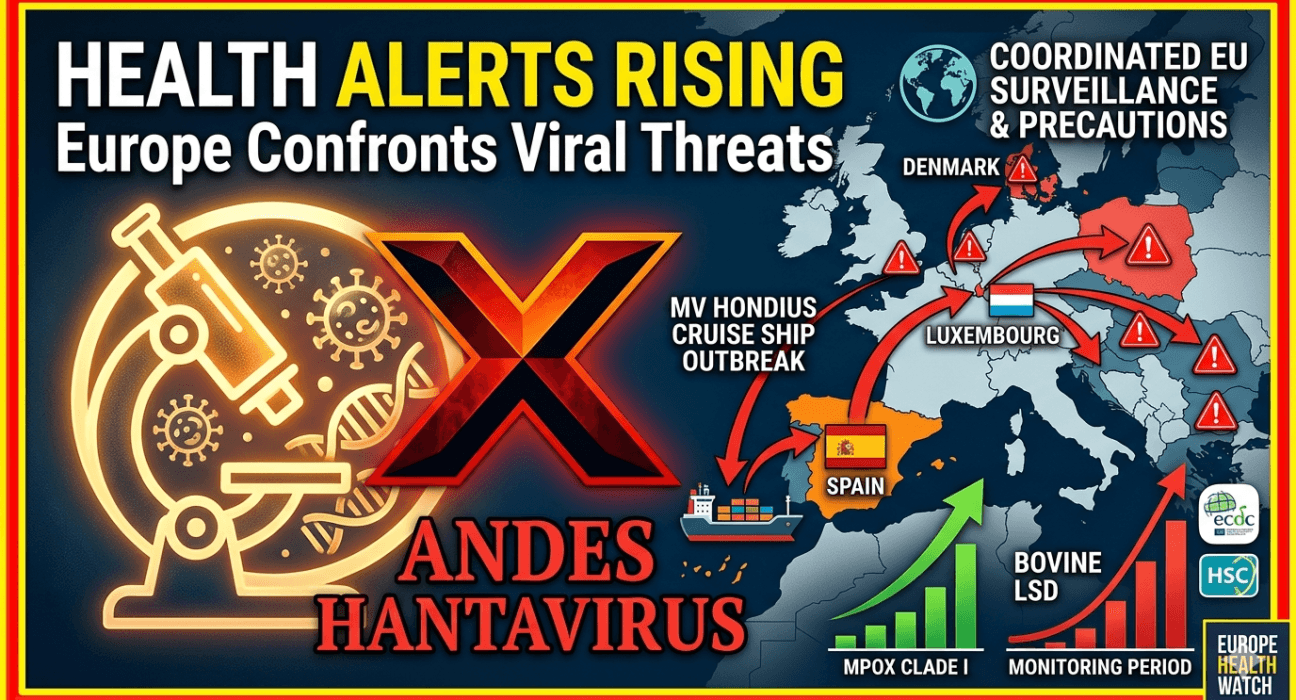
A significant respiratory health alert has been issued following an outbreak of Andes hantavirus linked to the cruise ship MV Hondius. As of mid-May 2026, the situation has escalated:
- Confirmed Cases: Nine cases have been confirmed, with two additional probable cases under investigation.
- Mortality: Three deaths have been recorded among the infected passengers.
- Spain’s Involvement: One confirmed case has been identified in Spain involving a repatriated individual. The Spanish Coordination Centre for Health Alerts and Emergencies (CCAES) is leading the local response.
- Transmission Risk: Unlike many other hantaviruses, the Andes strain is unique for its ability to spread via person-to-person transmission through prolonged close contact.
2. Multi-Viral Surveillance in the EU
Beyond the hantavirus, European health agencies are monitoring several other critical developments:
- Mpox (Clade I/Ib): Luxembourg recently confirmed its first case of Clade I Mpox. Similar cases indicating potential local transmission have been flagged in Denmark and Poland.
- Bovine Health in Spain: Emergency measures were implemented in April 2026 to contain Lumpy Skin Disease, a viral threat affecting livestock across several Spanish regions.
3. Public Health Response and Precautions
The European Centre for Disease Prevention and Control (ECDC) and the Health Security Committee (HSC) have activated high-level coordination protocols:
- Monitoring Window: All individuals who disembarked from the MV Hondius in Spain, the UK, or Cabo Verde are advised to monitor their health for 45 days.
- Symptom Awareness: Public health notices emphasize watching for high fever, severe respiratory distress, and gastrointestinal issues.
- Canary Islands Protocols: Strict disembarkation and health screening measures were applied when the vessel arrived in the Canary Islands on May 10, 2026.
4. Outlook for EU Health Security
While the risk to the general public remains classified as “very low,” the diversity of the outbreaks highlights the importance of the EU’s integrated surveillance systems. Officials are focused on rapid contact tracing to prevent the Andes hantavirus from establishing a foothold in the terrestrial population.