






US-Iran Peace Talks in Pakistan: Can Islamabad Avert a 2026 Global Energy Crisis?
Diplomatic Mediator and Economic Victim
1. The Islamabad Opening
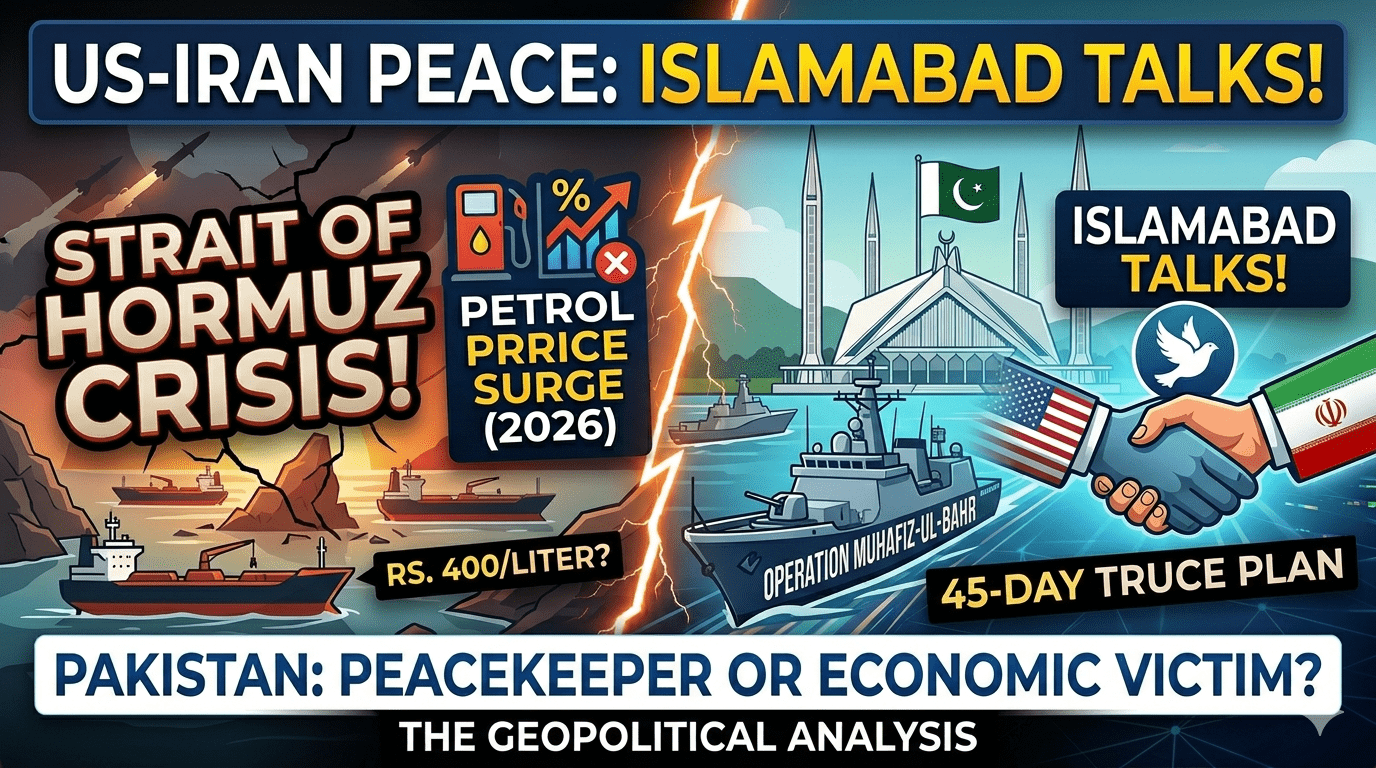
In a remarkable shift, Pakistan has emerged as the primary mediator between the United States and Iran. In April 2026, Islamabad hosted the “Islamabad Talks” at the Serena Hotel, marking the first time senior delegations from both nations converged since 1979. Led by Prime Minister Shehbaz Sharif and supported by regional partners like Saudi Arabia and China, Pakistan has proposed a 45-day two-phased truce plan aimed at an immediate ceasefire and the reopening of the Strait of Hormuz.
2. The Strait of Hormuz & Maritime Security
The conflict has led to the “largest supply disruption in global oil history” following Iran’s blockade of the Strait of Hormuz in March 2026. This waterway handles approximately 20% of the world’s oil and LNG shipments. To protect its own energy security, the Pakistan Navy launched Operation Muhafiz-ul-Bahr, deploying naval assets to escort oil tankers and ensure the smooth flow of maritime trade into Karachi.
3. Impact on Petrol Prices (May 2026)
The regional instability has directly translated into a “grocery and fuel supply emergency” for Pakistan. Effective May 1, 2026, the Oil and Gas Regulatory Authority (OGRA) revised petroleum prices, pushing costs toward the devastating Rs. 400 per liter mark:
- PSO Premier Euro 5 Petrol: Rs. 399.86 per liter
- Hi-Cetane Diesel: Rs. 399.58 per liter
- Standard Petrol (Super): Rs. 366.58 per liter
These hikes are fueling massive inflation and increasing freight costs, with the government warning that a prolonged crisis could permanently weaken the nation’s 2026 growth outlook.