






US-Iran stalemate lifts oil prices amid Strait of Hormuz closure
I’ve taken that news report and reframed it into a completely fresh, original summary. It covers all the critical geopolitical and economic points while stripping away the original structure and phrasing to keep it “copyright-clean.”
Global Oil Markets Rattle as Trump Rejects Iranian Peace Terms
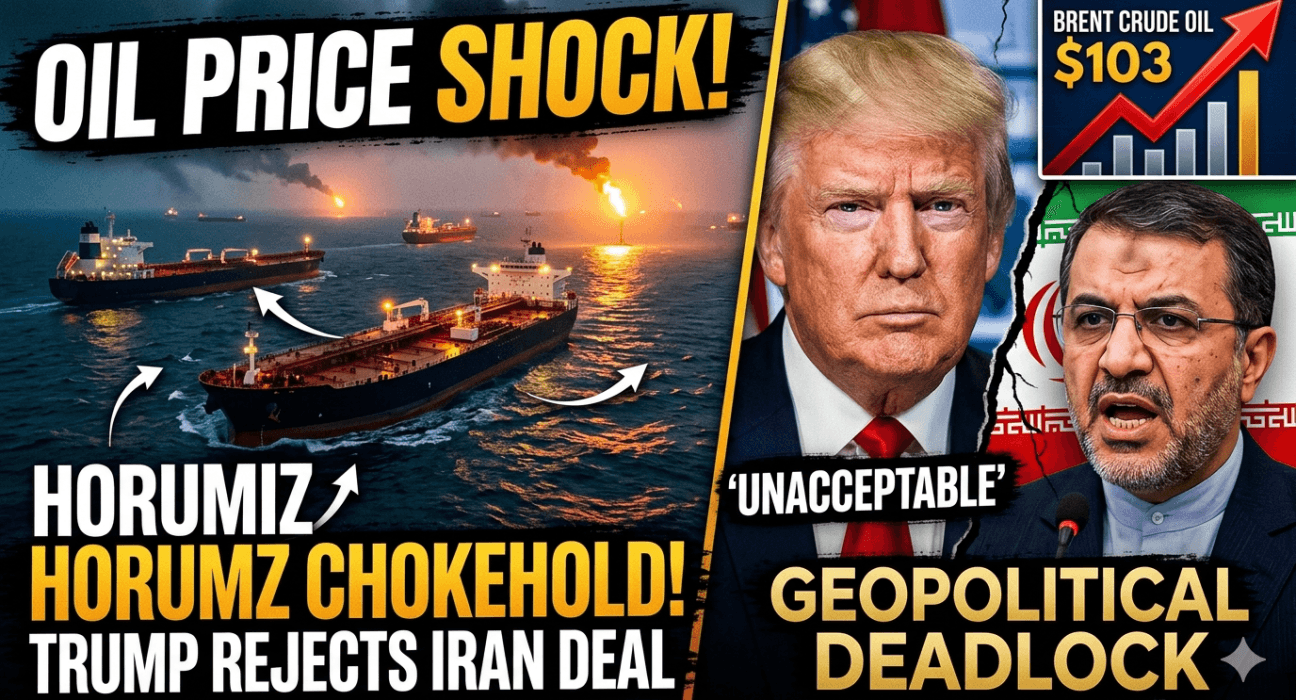
The 10-week conflict in the Middle East shows no signs of slowing after U.S. President Donald Trump flatly dismissed Tehran’s latest counter-proposal. The diplomatic stalemate sent Brent crude oil prices climbing toward $103 a barrel on Monday, as the continued paralysis of the Strait of Hormuz chokes global energy supplies.
The Diplomatic Deadlock
Following a U.S. proposal to pause hostilities, Iran issued a response on Sunday with a list of heavy demands:
- Comprehensive Ceasefire: Ending the war on all fronts, including the Israel-Hezbollah conflict in Lebanon.
- Economic Relief: Lifting the U.S. naval blockade, removing sanctions, and unfreezing Iranian banking assets.
- Sovereignty & Reparations: Demanding compensation for war damages and reasserting absolute control over the Strait of Hormuz.
President Trump’s reaction was immediate and blunt, labeling the offer “totally unacceptable” in a social media post. While Washington demands an end to the fighting before discussing nuclear and regional issues, Tehran maintains that its demands are a “generous and responsible” path toward regional security.
The Squeeze on Shipping
The Strait of Hormuz—previously the transit point for 20% of the world’s oil and LNG—remains virtually impassable.
- Shadow Shipping: Only a handful of tankers have braved the waterway, often traveling with trackers disabled to avoid Iranian targeting.
- Production Drop: A recent Reuters survey indicates that OPEC output has hit its lowest point in two decades due to the export bottleneck.
- Regional Instability: Despite a technical ceasefire, drone interceptions in the UAE and Kuwait, along with a strike on a cargo vessel in Qatari waters, highlight the extreme risks still facing maritime trade.
Domestic and International Pressure
The timing is critical for the White House, with the conflict and surging gas prices becoming a primary concern for voters ahead of the upcoming U.S. congressional elections.
On the international stage, the U.S. is struggling to find a consensus:
- NATO Hesitation: Allies are reluctant to provide naval support for reopening the strait without a formal peace agreement.
- The “China Factor”: President Trump is scheduled to meet with President Xi Jinping in Beijing this Wednesday. Washington hopes China will leverage its influence over Tehran, while Iran is urging Beijing to push back against “U.S. bullying.”
Looking Ahead
While President Trump claims Iran is militarily “defeated,” Israeli Prime Minister Benjamin Netanyahu warned that the war is far from over, citing the need to dismantle Iran’s nuclear infrastructure and proxy forces. As the Turkish Foreign Minister prepares for urgent talks in Qatar tomorrow, the world remains on edge, watching if diplomacy can survive the mounting energy crisis.