






China’s Foreign Trade Jumps 14.2% in April: China-Europe Railway Express Hits Record Milestone
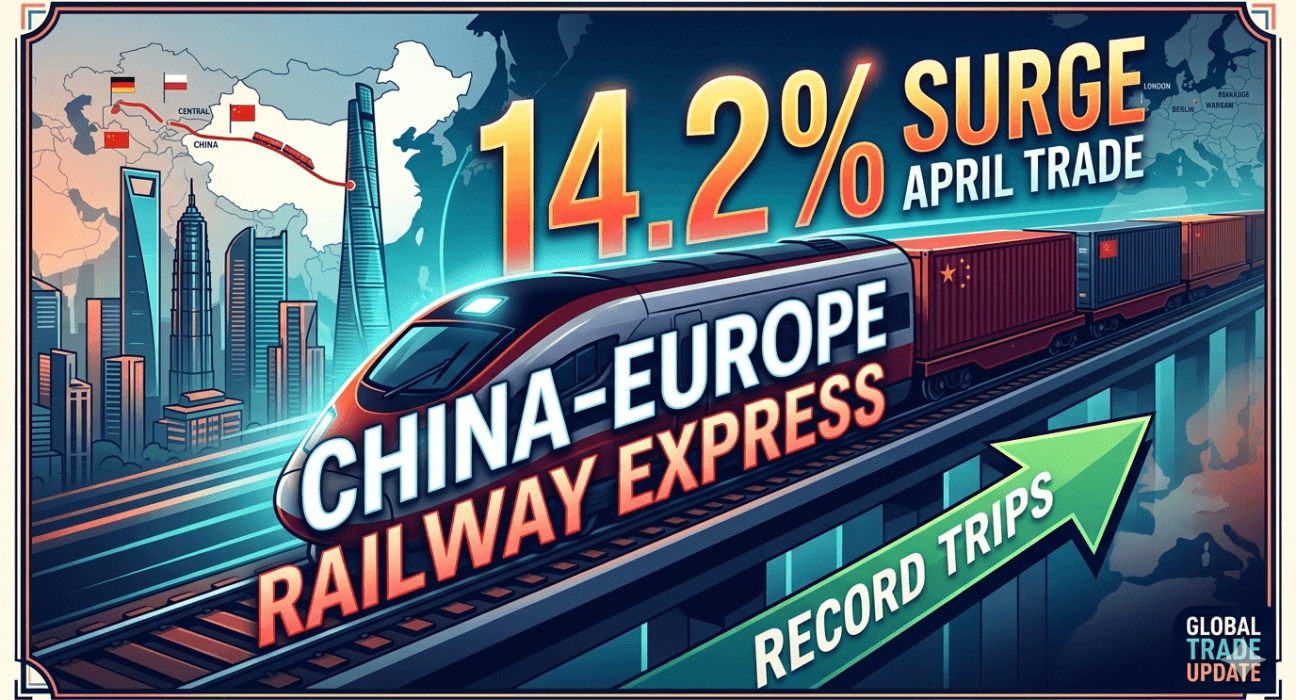
BEIJING – China’s foreign trade sector continues its robust 2026 momentum, reporting a 14.2% year-on-year surge in total trade value for April. The growth was spearheaded by a massive uptick in exports—particularly in the automotive and high-tech sectors—and underpinned by the record-breaking performance of the China-Europe Railway Express (CRE).
According to the latest customs data, the surge reflects a strategic pivot toward diversified trade routes as traditional maritime paths face evolving global logistics challenges.
The Railway Revolution
The China-Europe Railway Express has emerged as the “steel camel fleet” of the modern era. In April 2026, the network achieved a historic milestone, surpassing 130,000 total cumulative trips since its inception.
- Network Expansion: The CRE now connects 129 Chinese cities to 235 cities across 26 European nations.
- Efficiency Gains: Operational enhancements have slashed the shortest customs clearance times at border ports to under 30 minutes.
- High-Value Cargo: While timber and pulp remain staples, the trains are increasingly moving high-value goods, including lithium batteries, semiconductors, and complete “New Energy Vehicles” (NEVs).
Key Drivers of the April Surge
- Automotive Boom: Chinese automakers including Chery, BYD, and SAIC reported record overseas shipments in April. Passenger vehicle exports are poised to breach the 700,000 unit mark for the month.
- Tech Demand: Semiconductors and automatic data processing equipment saw double-digit growth, reinforcing China’s position in the high-end global value chain.
- Market Diversification: While trade with some Western markets remains complex, surges in trade with ASEAN, Central Asia, and Africa have more than offset regional fluctuations.
Looking Ahead
As the China-Europe Railway Express continues to optimize its “fixed timetable” services—which are 30% faster than regular freight trains—analysts expect the land-based trade corridor to play an even more critical role in stabilizing global supply chains through the remainder of 2026.