





FIFA’s $2 Million Problem: Can Infantino Really Stop World Cup Ticket Scalping?
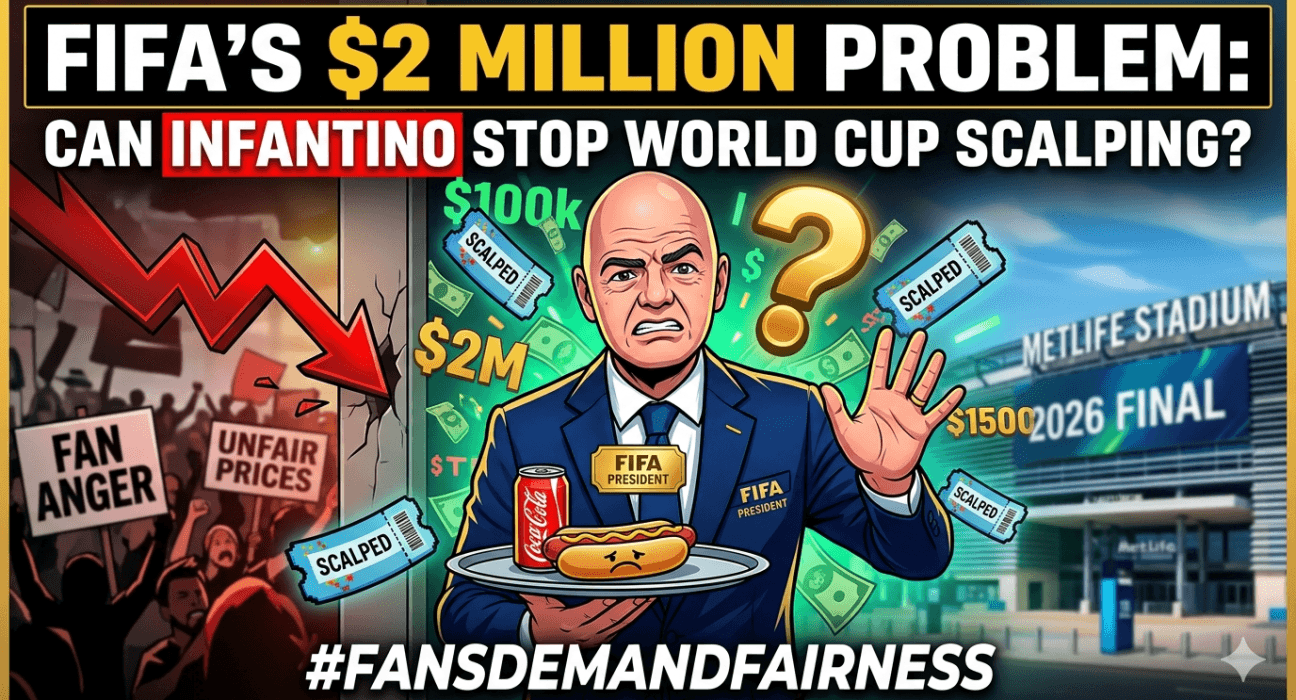
The road to the 2026 World Cup Final is being paved with record-shattering prices and a viral storm of fan frustration. As resale listings for the championship match in New Jersey hit a staggering $2 million per seat, FIFA President Gianni Infantino has found himself at the center of a PR firestorm, attempting to balance “market reality” with the soul of the sport.
The “Hot Dog and Coke” Promise
Addressing the controversy at the Milken Institute Global Conference, Infantino attempted to use humor to deflect from the eye-watering resale figures.
“If somebody buys a ticket for the final for $2 million, I will personally bring him a hot dog and a Coke to make sure that he has a great experience!”
While intended as a joke to highlight that “listing a price doesn’t mean someone will pay it,” the comment has largely backfired among supporters who feel the tournament is becoming a billionaire-only meetup.
The Dynamic Pricing Dilemma
For the first time, FIFA is leaning into dynamic pricing, a model where costs fluctuate based on real-time demand. This has led to a massive gap between “official” and “market” prices:
- Massive Demand: FIFA reports over 500 million ticket requests for 2026, a tenfold increase over previous tournaments.
- The “Double-Dip” Accusation: Critics point out that FIFA’s own resale platform takes a 15% fee from both the buyer and the seller, meaning the organization profits even more as prices skyrocket.
- The $300 Defense: Infantino argues that 25% of group-stage tickets are priced under $300, though fans counter that these are rarely for marquee matches involving host nations.
Can Scalping Actually Be Stopped?
While FIFA claims its hands are tied by U.S. laws that favor open resale markets, some regions are fighting back.
| Region | Action Taken |
| Ontario, Canada | Passed the “Putting Fans First Act”, forcing all 2026 matches in Toronto to be resold only at face value. |
| European Regulators | Fan groups (FSE) have lodged formal complaints with the European Commission over “inaccessible” pricing for loyal supporters. |
| United States | FIFA justifies the high costs by citing the U.S. as the “most developed entertainment market,” where high entry fees are the norm. |
The 2026 World Cup is shaping up to be the most profitable event in sports history, but the “2 million dollar problem” remains: at what point does the price of a ticket cost FIFA the loyalty of its global fanbase?